
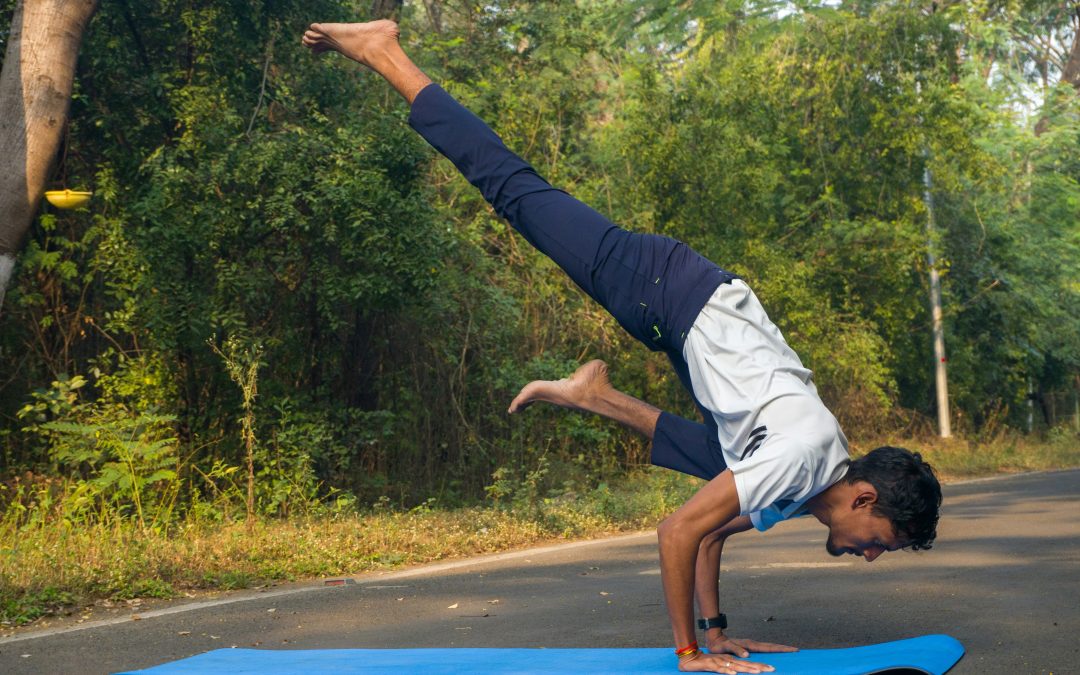
Calisthenics is a form of exercise that utilizes the weight of one’s own body to build strength, flexibility, and endurance. This method of training has ancient roots, tracing back to the early Greeks who used bodyweight movements to enhance athletic performance and physical prowess. Unlike traditional weightlifting, calisthenics emphasizes functional movements that engage multiple muscle groups simultaneously, promoting not only strength but also coordination and balance.
The beauty of calisthenics lies in its accessibility; it requires minimal equipment and can be performed virtually anywhere, making it an ideal choice for individuals seeking a versatile workout regimen. In recent years, calisthenics has gained popularity as a holistic approach to fitness, appealing to a wide range of individuals from beginners to seasoned athletes. The exercises can be easily modified to suit different fitness levels, allowing practitioners to progress at their own pace.
With a focus on body control and movement efficiency, calisthenics fosters a deep connection between mind and body, encouraging practitioners to develop not just physical strength but also mental resilience. As more people seek effective and sustainable ways to stay fit, calisthenics stands out as a powerful tool for achieving comprehensive physical health.
Key Takeaways
- Calisthenics uses bodyweight exercises to improve strength, flexibility, and endurance without equipment.
- Setting up a dedicated home workout space and proper warm-up routines enhance safety and effectiveness.
- Targeted exercises for upper body, lower body, and core build balanced full-body fitness.
- Combining calisthenics with cardio boosts overall cardiovascular health and stamina.
- Consistent progression and proper cool-down/stretching are key to long-term improvement and injury prevention.
Benefits of Calisthenics for Full Body Fitness
One of the most significant advantages of calisthenics is its ability to promote full-body fitness without the need for specialized equipment. By engaging multiple muscle groups through compound movements, calisthenics enhances overall strength and muscular endurance. Exercises such as push-ups, pull-ups, and squats require the coordination of various muscle groups, leading to improved functional strength that translates into everyday activities.
This holistic approach not only builds muscle but also enhances cardiovascular fitness, flexibility, and balance. Moreover, calisthenics is highly adaptable, making it suitable for individuals at any fitness level. Beginners can start with modified versions of exercises, such as knee push-ups or assisted pull-ups, while advanced practitioners can challenge themselves with more complex movements like muscle-ups or one-arm push-ups.
This scalability allows individuals to continuously progress and set new goals, keeping their workouts engaging and motivating. Additionally, calisthenics can be performed in various environments—whether at home, in a park, or at the gym—making it a convenient option for those with busy lifestyles. You can improve your strength and flexibility by practicing calisthenics regularly.
Setting Up Your Home Calisthenics Workout Space

Creating an effective home workout space for calisthenics requires minimal investment but thoughtful planning. The first step is to identify a suitable area that offers enough room for movement. Ideally, this space should be free from clutter and have a flat surface where you can perform exercises safely.
A living room, garage, or even a backyard can serve as an excellent workout area. Ensuring good ventilation and natural light can also enhance your workout experience, making it more enjoyable and motivating. While calisthenics primarily relies on bodyweight exercises, having some basic equipment can enhance your training options.
A sturdy pull-up bar is invaluable for upper body workouts, while resistance bands can provide additional resistance for various exercises. A yoga mat can offer comfort during floor exercises and stretching routines. Additionally, consider incorporating items like a sturdy chair or bench for dips and elevated push-ups.
By setting up a dedicated space with these essentials, you create an environment conducive to consistent training and personal growth.
Warm-Up Exercises for Calisthenics
Warming up before engaging in calisthenics is crucial for preparing the body and preventing injuries. A proper warm-up increases blood flow to the muscles, enhances flexibility, and primes the nervous system for physical activity. Dynamic stretches are particularly effective as they mimic the movements you will perform during your workout.
For instance, arm circles and leg swings can help loosen up the shoulders and hips, respectively. Incorporating mobility drills into your warm-up routine can further enhance your performance. Movements such as inchworms or hip openers not only increase range of motion but also activate the core muscles essential for stability during calisthenics exercises.
A well-rounded warm-up might last around 10-15 minutes and should include both dynamic stretches and mobility drills tailored to the specific workout planned for the day. This preparation sets the stage for a more effective workout session while minimizing the risk of strains or sprains.
Upper Body Calisthenics Exercises
| Exercise | Muscle Groups Targeted | Repetitions (Beginner) | Repetitions (Intermediate) | Repetitions (Advanced) | Equipment Needed | Calories Burned (per 10 min) |
|---|---|---|---|---|---|---|
| Push-ups | Chest, Triceps, Shoulders | 8-12 | 15-20 | 25-40 | None | 50-70 |
| Pull-ups | Back, Biceps, Shoulders | 3-5 | 8-12 | 15-20 | Pull-up Bar | 60-90 |
| Squats | Quadriceps, Glutes, Hamstrings | 10-15 | 20-30 | 40-50 | None | 55-75 |
| Plank | Core, Shoulders | 20-30 sec | 45-60 sec | 90+ sec | None | 30-50 |
| Burpees | Full Body | 5-8 | 12-15 | 20-30 | None | 80-100 |
| Leg Raises | Lower Abs, Hip Flexors | 10-15 | 20-25 | 30-40 | None | 40-60 |
Upper body calisthenics exercises are fundamental for building strength in the arms, shoulders, chest, and back. Push-ups are perhaps the most recognized upper body movement in calisthenics; they engage the pectoral muscles while also working the triceps and shoulders. Variations such as diamond push-ups or archer push-ups can increase difficulty and target different muscle groups more effectively.
Pull-ups are another cornerstone exercise that primarily targets the back muscles while also engaging the biceps and forearms. For those who may struggle with traditional pull-ups, assisted variations using resistance bands or performing negative pull-ups can help build strength progressively. Dips are also highly effective for developing tricep strength and can be performed using parallel bars or even a sturdy chair at home.
By incorporating these exercises into your routine, you can develop a well-rounded upper body that supports overall fitness goals.
Lower Body Calisthenics Exercises

Lower body strength is essential not only for athletic performance but also for daily activities such as walking, climbing stairs, and maintaining balance. Calisthenics offers a variety of lower body exercises that effectively target the quadriceps, hamstrings, glutes, and calves. Squats are foundational movements that engage multiple muscle groups in the lower body; variations like jump squats or pistol squats can add intensity and challenge balance.
Lunges are another versatile exercise that can be performed in various forms—forward lunges, reverse lunges, or lateral lunges—all of which target different aspects of lower body strength. Incorporating single-leg exercises such as Bulgarian split squats can further enhance stability and strength in each leg independently. Additionally, calf raises can be included to ensure comprehensive development of the lower leg muscles.
By focusing on these exercises, practitioners can build a strong foundation that supports both athletic endeavors and everyday movements.
Core Strengthening Calisthenics Exercises
A strong core is vital for overall stability and functional movement in all physical activities. Calisthenics provides numerous exercises specifically designed to strengthen the core muscles, which include not only the abdominal muscles but also the obliques and lower back. Planks are one of the most effective core exercises; they engage multiple muscle groups while promoting stability throughout the body.
Variations such as side planks or plank jacks can increase difficulty and target different areas of the core. Leg raises are another excellent exercise for developing core strength; they primarily target the lower abdominal muscles while also engaging the hip flexors. Incorporating dynamic movements like mountain climbers or hollow body holds can further challenge core stability and endurance.
Additionally, exercises like Russian twists can enhance rotational strength in the obliques. By integrating these core-focused movements into your routine, you will not only improve your overall strength but also enhance performance in other calisthenics exercises.
Full Body Calisthenics Circuits
Full body circuits are an efficient way to maximize your workout time while engaging multiple muscle groups simultaneously. These circuits typically consist of a series of exercises performed back-to-back with minimal rest in between, creating an intense workout that boosts cardiovascular fitness alongside strength training. A sample circuit might include push-ups, squats, burpees, and planks—each targeting different areas of the body while keeping your heart rate elevated.
The beauty of full body circuits lies in their adaptability; you can modify the number of repetitions or sets based on your fitness level or time constraints. For beginners, starting with fewer repetitions or shorter circuits allows for gradual adaptation to higher intensity workouts. Advanced practitioners can increase difficulty by adding explosive movements like jump squats or plyometric push-ups to challenge their strength and endurance further.
This approach not only keeps workouts fresh but also promotes continuous improvement over time.
Incorporating Cardio into Your Calisthenics Workout
While calisthenics primarily focuses on strength training through bodyweight exercises, incorporating cardiovascular elements into your routine can enhance overall fitness levels significantly. High-intensity interval training (HIIT) is an effective method that combines short bursts of intense activity with brief rest periods; this approach elevates heart rate while building muscular endurance. For instance, alternating between sets of push-ups and high knees creates a dynamic workout that targets both strength and cardiovascular fitness.
Another way to integrate cardio into calisthenics is through circuit training that includes jumping jacks or burpees between strength exercises. This not only keeps your heart rate elevated but also adds an element of fun to your workouts. Additionally, activities like running or cycling can complement your calisthenics routine on alternate days to ensure balanced fitness development without overtraining specific muscle groups.
Cool-Down and Stretching After Your Calisthenics Workout
Cooling down after a calisthenics workout is essential for recovery and injury prevention. A proper cool-down helps gradually lower heart rate while promoting blood flow to fatigued muscles. Engaging in light aerobic activity such as walking or gentle cycling for 5-10 minutes serves as an effective transition from high-intensity exercise back to rest.
Following this light activity, static stretching should be incorporated to enhance flexibility and alleviate muscle tension built up during workouts. Focus on major muscle groups used during your session—holding stretches for 15-30 seconds each can help improve range of motion over time. Stretching not only aids recovery but also prepares your body for future workouts by maintaining optimal muscle elasticity.
Tips for Progressing in Your Calisthenics Training
Progressing in calisthenics requires patience and consistency; however, there are several strategies you can employ to ensure continuous improvement in your training regimen. One effective method is tracking your workouts meticulously—keeping a journal of your exercises, sets, reps, and any modifications made allows you to visualize progress over time and set achievable goals. Incorporating progressive overload is another key principle in advancing your calisthenics skills; this involves gradually increasing the difficulty of your workouts by adding more repetitions, reducing rest time between sets, or attempting more challenging variations of exercises as you become stronger.
Additionally, seeking out online communities or local groups focused on calisthenics can provide motivation through shared experiences and tips from fellow practitioners. By embracing these strategies while remaining committed to your training routine, you will find yourself continually challenged and engaged in your calisthenics journey—ultimately leading to greater strength gains and overall fitness improvements.
If you’re looking to enhance your calisthenics home workout routine, you might find inspiration in this article on how to tone up for your special day. It offers valuable tips and exercises that can help you get fit and feel confident. Check it out here: Tone Up for Your Wedding: Get Fit for the Big Day.
FAQs
What is calisthenics?
Calisthenics is a form of exercise that uses body weight for resistance. It includes movements like push-ups, pull-ups, squats, and planks, designed to improve strength, flexibility, and endurance without the need for gym equipment.
Can I do calisthenics workouts at home?
Yes, calisthenics workouts are ideal for home exercise because they require minimal or no equipment and can be adapted to any space, making them convenient and accessible.
What are the benefits of calisthenics home workouts?
Benefits include improved muscle strength, flexibility, cardiovascular health, and coordination. Calisthenics also promotes functional fitness and can be easily modified to suit all fitness levels.
Do I need any equipment for calisthenics at home?
Most calisthenics exercises require no equipment. However, optional items like pull-up bars, resistance bands, or parallettes can enhance the workout but are not necessary.
How often should I do calisthenics workouts at home?
For general fitness, performing calisthenics 3 to 5 times per week is recommended. It’s important to allow rest days for muscle recovery and to avoid overtraining.
Can beginners start calisthenics workouts at home?
Absolutely. Calisthenics is highly adaptable, and beginners can start with basic exercises and gradually increase intensity and complexity as their strength and skill improve.
How do I progress in calisthenics workouts?
Progression can be achieved by increasing repetitions, sets, or workout frequency, reducing rest time, or advancing to more challenging variations of exercises.
Is calisthenics effective for weight loss?
Yes, calisthenics can aid weight loss by building muscle and increasing metabolism. Combining calisthenics with a balanced diet and cardiovascular exercise enhances fat loss results.
Are calisthenics workouts safe to do at home?
When performed with proper form and technique, calisthenics workouts are generally safe. It’s important to warm up, start at an appropriate level, and listen to your body to prevent injury.
How long does a typical calisthenics home workout last?
A typical session can last anywhere from 20 to 60 minutes, depending on fitness goals, workout intensity, and individual schedules.