
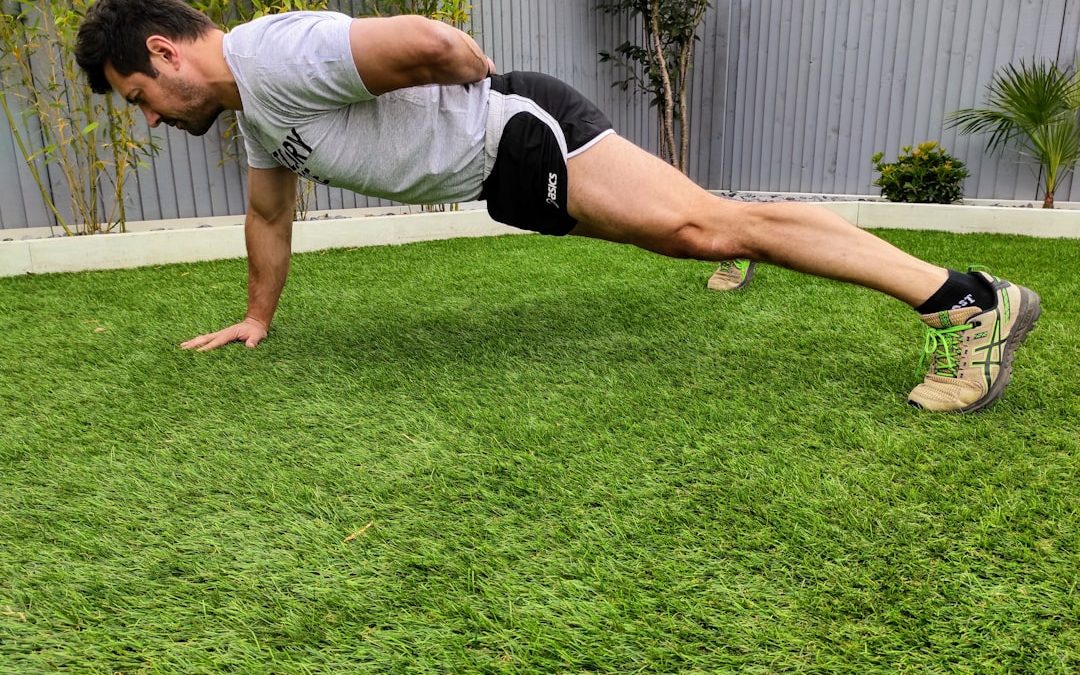
Calisthenics is a form of exercise that utilizes body weight for resistance, eliminating the need for external weights or equipment. This versatile and effective method builds strength, flexibility, and endurance. Practitioners can perform calisthenics exercises anywhere, making it a convenient option for home or outdoor workouts.
The simplicity of calisthenics is its key advantage, requiring only the body and minimal space for a comprehensive workout. This centuries-old exercise form has experienced a resurgence in popularity due to its accessibility and efficacy. Calisthenics extends beyond muscle building, focusing on enhancing overall fitness and functional strength.
It improves posture, balance, and coordination, making it suitable for individuals of all ages and fitness levels. The practice can be adapted to meet individual needs and goals, accommodating both beginners and experienced athletes. Calisthenics offers a wide range of exercises, from basic bodyweight movements to advanced techniques, providing a customizable and versatile fitness regimen.
This article will examine the benefits of calisthenics and explore essential moves that contribute to total body strength and overall fitness improvement.
Key Takeaways
- Calisthenics is a form of exercise that uses body weight for resistance and does not require equipment.
- Calisthenics can improve total body strength, flexibility, and cardiovascular endurance.
- Push-ups are a fundamental calisthenics move that targets the chest, shoulders, and triceps.
- Pull-ups are an effective calisthenics move for building upper body strength, targeting the back, biceps, and forearms.
- Squats are a key calisthenics move that targets the lower body, including the quadriceps, hamstrings, and glutes.
The Benefits of Calisthenics for Total Body Strength
Functional Strength for Everyday Activities
Calisthenics exercises also promote functional strength, which is essential for everyday activities such as lifting, carrying, and reaching. This can help improve overall physical performance and reduce the risk of injury.
Improved Flexibility and Balance
Many calisthenics exercises require a full range of motion, which can help improve joint mobility and flexibility. This can be particularly beneficial for those who sit at a desk all day or have sedentary lifestyles. Furthermore, calisthenics exercises often involve stabilizing muscles, which can help improve balance and coordination.
A Holistic Approach to Fitness
This can be especially beneficial for older adults who are at risk of falls and injuries. Overall, calisthenics offers a holistic approach to fitness, helping to improve strength, flexibility, and overall physical performance.
Essential Calisthenics Move #1: Push-Ups
Push-ups are one of the most fundamental calisthenics exercises and are an excellent way to build upper body strength. They primarily target the chest, shoulders, and triceps, but also engage the core and lower body for stability. Push-ups can be modified to suit different fitness levels, making them accessible to beginners while still challenging for advanced athletes.
Variations such as incline push-ups, decline push-ups, and diamond push-ups can target different muscle groups and add variety to your workout routine. To perform a push-up, start in a plank position with your hands shoulder-width apart and your body in a straight line from head to heels. Lower your body by bending your elbows until your chest nearly touches the ground, then push back up to the starting position.
It is important to maintain proper form throughout the movement, keeping your core engaged and your body in a straight line. Push-ups can be performed anywhere and require no equipment, making them a convenient and effective exercise for building upper body strength.
Essential Calisthenics Move #2: Pull-Ups
Pull-ups are another essential calisthenics exercise that targets the muscles of the upper body, particularly the back, biceps, and forearms. They are an excellent way to build pulling strength and can help improve posture and upper body muscle balance. Pull-ups can be challenging for beginners, but with practice and dedication, they can be a highly effective exercise for building upper body strength.
To perform a pull-up, start by gripping an overhead bar with your hands slightly wider than shoulder-width apart. Hang from the bar with your arms fully extended, then pull yourself up until your chin clears the bar. Lower yourself back down with control to complete one repetition.
If you are unable to perform a full pull-up, you can start with assisted pull-ups using resistance bands or a pull-up machine. As you build strength, you can gradually decrease the assistance until you are able to perform unassisted pull-ups. Pull-ups are a challenging but rewarding exercise that can help build upper body strength and improve overall physical performance.
Essential Calisthenics Move #3: Squats
Squats are a fundamental calisthenics exercise that targets the muscles of the lower body, including the quadriceps, hamstrings, glutes, and calves. They are an excellent way to build lower body strength and improve functional movement patterns such as sitting, standing, and walking. Squats can be performed with no equipment and offer a wide range of variations to suit different fitness levels and goals.
To perform a squat, stand with your feet shoulder-width apart and your toes slightly turned out. Lower your body by bending your knees and hips, keeping your chest up and your back straight. Descend until your thighs are parallel to the ground, then push through your heels to return to the starting position.
It is important to maintain proper form throughout the movement, keeping your knees in line with your toes and your core engaged. Squats can be performed with added resistance using dumbbells or kettlebells to increase the challenge and build lower body strength.
Essential Calisthenics Move #4: Plank
Benefits of the Plank
One of the greatest benefits of the plank is that it can be performed anywhere, without any equipment, and offers a wide range of variations to suit different fitness levels.
Proper Form and Technique
To perform a plank, start in a push-up position with your hands directly under your shoulders and your body in a straight line from head to heels. Engage your core muscles and hold this position for a set amount of time, typically starting with 30 seconds and gradually increasing as you build strength. It is important to maintain proper form throughout the plank, keeping your core engaged and avoiding any sagging or arching in the lower back.
Variations and Progressions
Planks can be modified to suit different fitness levels by performing them on the forearms or adding movement such as plank jacks or plank rotations to add variety to your core workout routine.
Essential Calisthenics Move #5: Lunges
Lunges are a fundamental calisthenics exercise that targets the muscles of the lower body, including the quadriceps, hamstrings, glutes, and calves. They are an excellent way to build lower body strength and improve single-leg stability and balance. Lunges can be performed with no equipment and offer a wide range of variations to suit different fitness levels and goals.
To perform a lunge, start by standing with your feet hip-width apart. Take a step forward with one leg and lower your body until both knees are bent at a 90-degree angle. Push through the heel of your front foot to return to the starting position, then repeat on the other side.
It is important to maintain proper form throughout the lunge, keeping your chest up and your back straight while engaging your core for stability. Lunges can be performed with added resistance using dumbbells or kettlebells to increase the challenge and build lower body strength. In conclusion, calisthenics is a versatile and effective form of exercise that offers a wide range of benefits for total body strength and fitness.
From building upper body strength with push-ups and pull-ups to improving lower body strength with squats and lunges, calisthenics exercises can be tailored to suit individual needs and goals. In addition to building strength, calisthenics also promotes flexibility, balance, coordination, and functional movement patterns. Whether you are a beginner or an experienced athlete, calisthenics offers a holistic approach to fitness that can help improve overall physical performance and reduce the risk of injury.
With its accessibility and effectiveness, calisthenics is an excellent option for those looking to build strength and improve their overall health and well-being.
FAQs
What are calisthenics?
Calisthenics are a form of exercise that uses the body’s own weight for resistance, and typically involves minimal equipment. It includes a variety of movements such as push-ups, pull-ups, squats, and lunges.
What are the benefits of calisthenics?
Calisthenics can improve strength, flexibility, and cardiovascular health. It also helps in developing body control, coordination, and balance. Additionally, calisthenics can be done anywhere without the need for a gym or specialized equipment.
What are the 5 essential calisthenics moves for total body strength?
The 5 essential calisthenics moves for total body strength are push-ups, pull-ups, squats, lunges, and planks. These exercises target multiple muscle groups and provide a full-body workout.
How often should I do calisthenics exercises?
It is recommended to do calisthenics exercises at least 2-3 times per week to see improvements in strength and overall fitness. It’s important to allow for rest and recovery between sessions to prevent overtraining.
Can calisthenics help with weight loss?
Yes, calisthenics can aid in weight loss as it increases muscle mass and boosts metabolism. Additionally, calisthenics exercises can be modified to be more challenging, which can help in burning more calories. However, it’s important to combine calisthenics with a balanced diet for effective weight loss.